
California Estimated Taxes: What Small Business Owners Need to Know in 2026

By Rockwell Staff

For many California business owners, taxes aren't something you deal with once a year and forget about until next April. If you're self-employed, run a small business, own an LLC, or receive income that doesn't have taxes automatically withheld, you're expected to pay taxes throughout the year through estimated tax payments.
Yet estimated taxes remain one of the most common sources of confusion for entrepreneurs. Some business owners assume they can simply pay their tax bill when they file their return, only to discover penalties for underpayment. Others struggle to determine how much they should be paying because their income changes from month to month.
The good news is that estimated taxes don't have to be complicated. With a basic understanding of the rules and a solid bookkeeping system, you can stay compliant, avoid surprises, and keep your cash flow under control.
What You'll Learn:
✓ Who needs to pay estimated taxes
✓ How to estimate your tax payments
✓ California payment deadlines
✓ Ways to avoid penalties
✓ Common questions from business owners
What Are Estimated Taxes?
Estimated taxes are advance payments made during the year on income that isn't subject to payroll withholding.
When you work as an employee, your employer automatically deducts taxes from every paycheck and sends those funds to the IRS and the state on your behalf. Business owners don't have that convenience. Instead, the government expects taxes to be paid as income is earned.
These payments may cover several types of taxes, including:
Federal income tax
California state income tax
Self-employment tax, when applicable
Think of estimated taxes as a way of spreading your tax obligation across the year rather than facing one large bill at filing time. The tax system is designed as a pay-as-you-earn system, and estimated payments help satisfy that requirement.
Who Typically Needs to Pay Estimated Taxes?
Many entrepreneurs are surprised to learn that estimated tax requirements apply to more than just sole proprietors.
You may need to make estimated payments if you:
✓ Operate as a sole proprietor
✓ Own a single-member LLC
✓ Receive income from a partnership
✓ Earn profits through an S corporation
✓ Work as a freelancer or independent contractor
✓ Collect rental income
✓ Generate substantial investment income
✓ Expect to owe taxes beyond what has already been withheld
In California, taxpayers who anticipate owing at least $500 in state taxes after credits and withholding generally need to make estimated payments. For many business owners, this means quarterly tax planning becomes an important part of managing cash flow and avoiding unexpected liabilities.
The key point is that waiting until tax season to pay what you owe can result in penalties, even if you're ultimately able to pay the entire balance.
Waiting until tax season to pay taxes can result in penalties and interest, even if you're ultimately able to pay the full balance. |
A Common Question: How Much Should I Set Aside for Taxes?
There is no one-size-fits-all percentage. Tax obligations vary based on income, entity structure, deductions, and other factors. However, many business owners find it helpful to regularly set aside a portion of each payment they receive in a separate tax savings account. Reviewing your financials throughout the year and working with a tax advisor can help ensure you're reserving an appropriate amount and avoiding surprises at tax time.
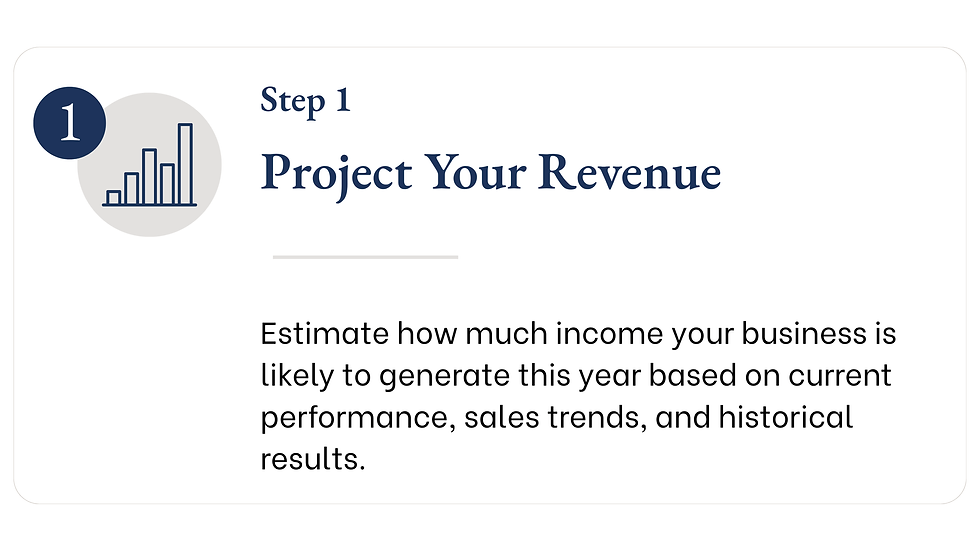
How to Estimate Your Tax Payments
While tax calculations can seem overwhelming at first, the process becomes much easier when approached step by step.
 |  |
 |  |
 | |
California Estimated Tax Deadlines
California follows a quarterly payment schedule, although the payment percentages are not always evenly divided throughout the year.
For most taxpayers, estimated payments are generally due on:
Due Date | Payment Period |
April 15 | First Payment |
June 15 | Second Payment |
September 15 | Third Payment |
January 15 | Fourth Payment |
If a due date falls on a weekend or holiday, the deadline typically moves to the next business day.
One mistake business owners often make is assuming all four payments are equal. California's payment requirements can differ from federal rules, which is why it's important to review the current guidelines each year.
Missing a deadline, even by accident, can trigger penalties and interest charges.
Practical Ways to Avoid Penalties
The easiest way to avoid estimated tax issues is to make tax planning part of your regular financial routine rather than a last-minute exercise.
Keep Your Books Current
Reliable bookkeeping is the foundation of accurate tax planning.
When your financial reports are updated regularly, you gain a clearer picture of profitability and can make more informed decisions about upcoming tax payments.
Set Aside Money for Taxes
Many business owners run into trouble because they treat all incoming revenue as available cash.
Creating a separate tax savings account and setting aside a percentage of every payment received can help ensure funds are available when quarterly deadlines arrive.
Revisit Your Numbers Quarterly
Businesses evolve quickly.
A new client, a major contract, unexpected expenses, or a change in market conditions can dramatically affect your tax situation. Reviewing projections every few months helps prevent underpayment issues before they occur.
At Rockwell, we often find that business owners revisit their tax estimates only after receiving a large tax bill or penalty notice. Reviewing your numbers quarterly creates opportunities to make adjustments before small issues become costly surprises.
Understand Safe Harbor Rules
In some situations, taxpayers can avoid penalties by paying a certain percentage of the prior year's tax liability, even if their income increases significantly in the current year.
Because these rules vary depending on income and filing circumstances, it's important to understand how they apply to your specific situation.
Work With a Tax Professional
Estimated taxes involve more than plugging numbers into a calculator.
A knowledgeable tax advisor can help you project income, identify deductions, evaluate tax-saving opportunities, and ensure payments are made accurately and on time.
Final Thoughts
Estimated taxes may not be the most exciting part of running a business, but they are one of the most important. Understanding who must pay, how payments are calculated, and when deadlines occur can help you avoid unnecessary penalties and reduce stress throughout the year.
More importantly, tax planning shouldn't exist in a vacuum. Strong bookkeeping, consistent financial reporting, and proactive tax management all work together to create a healthier business.
Business owners who stay ahead of their estimated tax obligations are often better positioned to preserve cash flow, make smarter financial decisions, and focus their energy on growing the business rather than reacting to tax surprises.
Frequently Asked Questions About California Estimated Taxes
How much should I set aside for taxes as a California business owner?
While every situation is different, many business owners set aside a percentage of each payment they receive to help cover federal and state tax obligations. A tax professional can help determine an appropriate amount based on income and business structure.
What happens if I miss an estimated tax payment?
Missing a payment can result in penalties and interest, even if you pay the full balance when filing your return.
Do LLC owners need to pay estimated taxes?
Many LLC owners do. The requirement depends on how the business is taxed and how much tax is expected to be owed during the year.
Can I adjust my estimated tax payments during the year?
Yes. If your income increases or decreases, future payments can typically be adjusted to better reflect actual earnings.
Need Help Planning for Taxes?
Strong bookkeeping and proactive tax planning can help California business owners avoid surprises and make more confident financial decisions.
Related Services:


